Instructors of Legacy Martial Arts Training
Click on picture of an instructor to find out more about them.
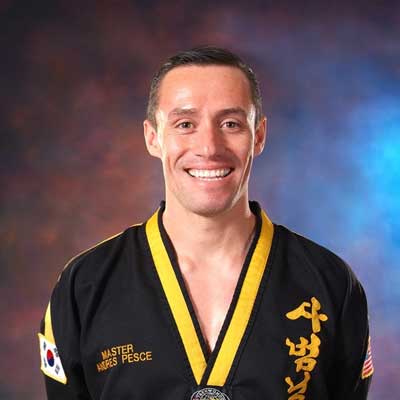
Master Andres Pesce
Master Andres Pesce
Master Andres Pesce
Master Andres Pesce began his journey in martial arts at the age of 9 in Santiago, Chile. He initially studied Judo. His parents had reservations against his participation but he soon won them over with his enthusiasm. Soon afterwards, Master Pesce began learning Tang Soo Do at a local church where he demonstrated considerable talent and dedication. When Master Pesce was 13 years old, he witnessed a college-level Taekwondo class and instantly knew that he wanted to study Taekwondo. He was significantly younger than the other students but he convinced the Master, through determination and persistence, to give him an opportunity to train at the college level. At 14 years of age, he began formal Taekwondo training under Master Walter Khune a former Chilean National Team member and International Team competitor.
Master Pesce received his Black belt after many years of practice under Master Khune and had already began competing at the National level circuit. He was a repeated National Champion. At age 18, while participating at a competition seminar, the Spanish National Team coach, Ireno Fargas, recognized Master Pesce’s talent and potential. He made a recommendation to the Chilean National Team representatives. Based on those recommendations, Master Pesce was promoted to a fully-sponsored position on the Chilean National Team. Master Ireno Fargas was considered at the time the best Taekwondo coach in the world having produced several Olympic and World champions. Master Pesce trained 6-8 hours a day and successfully represented Chile in several National and International competitions.
“Being in the national team was one of the most intense experiences of my life, We were tested daily with our training routines that pushed us to the edge. It demanded an increadible amount determination to endure the physical and mental challenges we faced in a daily basis. The level of competition between the athletes was so high that there was always a very edgy environment with very tense interactions. While sometimes new people were invited to train with the national team only very small percentage will make past the first week, many of the new athletes could have great skills but It did not mean you were suited to train at that level in such intense and rigid disciplined sport, you needed to want to be the best to train with the best. If someone was not ready to accept such an intense training agenda it was only a matter of days before they would disappear. Athletes would get hurt regularly during sparring practice more than while competing, and over all the training was meant create more than just athletes but fighters worthy of representing the country at the World Class Level”
Master Andres Pesce began teaching Taekwondo while in Chile. He found his way to California while competing internationally and he began training under another world-renowned and former Olympic coach Grandmaster Nam Soo Cho. At the same time, Master Pesce began teaching locally and he helped establish and manage several Taekwondo schools. Master Pesce recognized the importance of properly promoting Taekwondo as a physical, mental and spiritual endeavor. He enjoyed the bonds that developed with his students and eventually realized that instruction had become his new passion.
Back when Master Pesce was 12 or 13 years old, he read a book written by a Spanish Master who was affiliated with Grandmaster Kwang Sik Myung. The book identified Grandmaster Myung as the highest rank in Hapkido and a direct student of Young Sul Choi, the founder of Hapkido. As a child, Master Pesce dreamt of learning Hapkido under a Grandmaster like him and, by a combination of fate and good fortune, his childhood dreams came true.
Master Pesce came about Grandmaster Myung’s studio while taking a rather fortuitous walk in the city of Tustin. He was looking for a local place to train so he entered the dojang and spoke with Grandmaster Myung. Master Pesce provided his credentials and explained that he wanted to expand his martial arts repertoire by studying Hapkido. Grandmaster Myung invited him to train and teach with him. Master Pesce accepted the invitation and he became an instructor at the World Hapkido Federation Headquarters. It was only afterwards that Master Pesce realized that Grandmaster Myung was the same person he had read about as a child. Master Pesce never told the Late Grandmaster about this twist of fate but he cherished the opportunity to study and learn under such an esteemed person. Master Pesce received his Black belt in Hapkido under the tutelage of The late Grandmaster Kwang Sik Myung.
Master Andres Pesce would spent countless hours on a daily basis helping Supreme Grandmaster Kwang Sik Myung with more than just teaching. He also spent time cleaning the studio, translating documents from spanish to english, assisting his seminars as a demonstrator and also furthering relationships with spanish speaking countries to further help the growth of the World Hapkido Federation in latin america. His help became so crucial to the late Grandmaster that he would in exchange teach Master Pesce private lessons of Hapkido hoping that one day he would pass on to others the knowledge that once was passed on to him by his teacher.
Master Pesce until this day respects and values the relationship he had with Grandmaster Myung, as he considered him his father more than his teacher and a mentor more than just a legend in the martial arts.
“I still remember when Grandmaster told me he would teach me everything he knew so I could share this knowledge with others, and not for it to die as he feared”
After the passing of Master Pesce’s Master, Supreme Grandmaster Kwang Sik Myung, he felt the need to look for a new leader, a new mentor to follow. It felt very natural for Master Pesce to seek for masters of the same caliber and background of the late Grandmaster. It was then when he decided to align himself with Grandmaster Hong Sik Myung, who was the younger brother of his late Grandmaster. Grandmaster Hong Sik Myung lives and breathes marital arts with such passion that everyone around him can’t help but to respect him.
Martial Arts Experience and Competition Record:
• 28 years experience practicing martial arts
• 5th Dan Black Belt in Taekwondo
• 3rd Dan Black Belt in Hapkido
• Former Chilean National Team member
• 8 Times National Champion
• 2nd Place at World Games 2003
• California Open Gold Medal 1999
• Pan American Champion 1999
• San Diego Open Champion 1999
• California Champion 2005
• National Olympic Qualifier 2003
• World Mexico Open 1997
• World Mexico Open 2000
• USTU President’s Cup Gold Medal 2003
• Former professional athlete sponsored by the Government of Chile
• Top Athlete of Chile, 2000
• Former college team coach at University of Chile 1998- early 1999
• Former Chief Instructor at The World Hapkido Federation Headquarters
• Studied Hapkido directly and only with Supreme Grandmaster Kwang Sik Myung
• USA Taekwondo Certified Coach
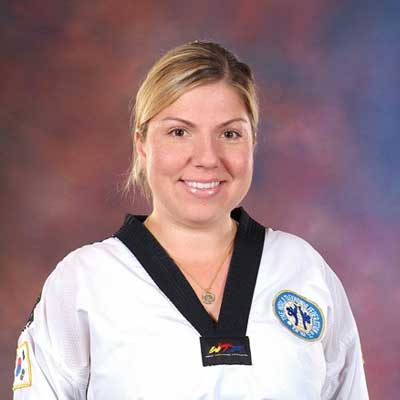
Ali Mooradian
Ali Mooradian
Ali Mooradian
Ali Mooradian began her Martial Arts training twelve years ago when she met Master Pesce. Master Pesce encouraged her to try Martial Arts, as she was always intrigued by it but had never taken the step to take a class at a dojang. With the encouragement of Master Pesce Ali began to train first in Kickboxing. She quickly became hooked on the kickboxing training and was training at one point up to five days per week. After training in kickboxing for two years she began training in Taekwondo. Ali had also just began her Masters program in Psychology when she began her Taekwondo journey.
The link between the mind and the body became evident to Ali as she was training in Taekwondo and studying for her Masters program to become a Marriage and Family Therapist. Ali is currently assisting in Taekwondo classes at Legacy, running the office and front desk at Legacy, while also working as a therapist. Ali specializes in working with adolescents and teenagers at her private practice in Newport Beach, California. Martial Arts are very important to Ali in her role as a therapist. Her Martial Arts knowledge and training have given her the inner strength and insight needed to work through tough situations. She often works with families on ways to integrate Martial Arts for positive behavioral change, emotional control, and healthy lifestyle choices. The connection between Martial Arts and Psychology is something she is still passionate about today; she uses her Martial Arts knowledge in both her private practice and at Legacy. Martial Arts builds the confidence, self-esteem, and self-understanding that children need throughout their development. As children practice Taekwondo they over come tough moments in their training. Through this they see their own abilities grow right in front of their eyes; this is where real self-worth, self-confidence and self-esteem come from. This is so valuable because it keeps children mentally stronger along with a deeper understanding of themselves as they grow. This mental toughness, insight and confidence helps keep children on the right path, less vulnerable to drug and alcohol abuse as teens, less likely to engage in risky behaviors, and make choices with their own self-worth, not the worth that others may try to put on them. This is the true value that Ali finds in Martial Arts; it helps children grow into healthy, mentally strong, and resilient people. This is the process of change that Martial arts delivers, it is in Ali’s opinion, one of the best trainings a person can do.